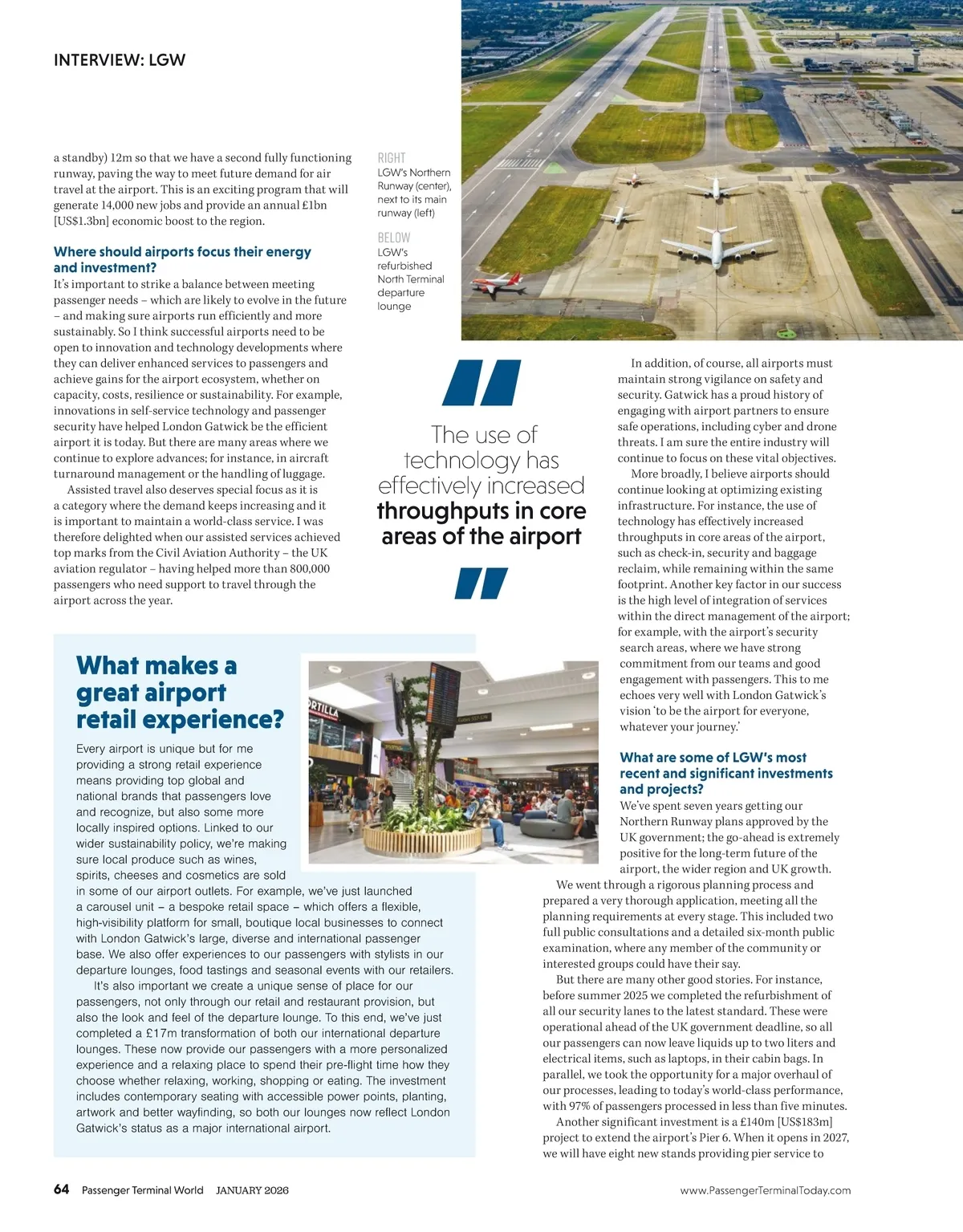
INTERVIEW: LGW a standby) 12m so that we have a second fully functioning runway, paving the way to meet future demand for air travel at the airport. This is an exciting program that will generate 14,000 new jobs and provide an annual £1bn [US$1.3bn] economic boost to the region. LGW’s Northern Runway (center), next to its main runway (left) LGW’s refurbished North Terminal departure lounge RIGHT Where should airports focus their energy and investment? It’s important to strike a balance between meeting passenger needs – which are likely to evolve in the future – and making sure airports run efficiently and more sustainably. So I think successful airports need to be open to innovation and technology developments where they can deliver enhanced services to passengers and achieve gains for the airport ecosystem, whether on capacity, costs, resilience or sustainability. For example, innovations in self-service technology and passenger security have helped London Gatwick be the efficient airport it is today. But there are many areas where we continue to explore advances; for instance, in aircraft turnaround management or the handling of luggage. Assisted travel also deserves special focus as it is a category where the demand keeps increasing and it is important to maintain a world-class service. I was therefore delighted when our assisted services achieved top marks from the Civil Aviation Authority – the UK aviation regulator – having helped more than 800,000 passengers who need support to travel through the airport across the year. BELOW The use of technology has effectively increased throughputs in core areas of the airport What makes a great airport retail experience? Every airport is unique but for me providing a strong retail experience means providing top global and national brands that passengers love and recognize, but also some more locally inspired options. Linked to our wider sustainability policy, we’re making sure local produce such as wines, spirits, cheeses and cosmetics are sold in some of our airport outlets. For example, we’ve just launched a carousel unit – a bespoke retail space – which offers a flexible, high-visibility platform for small, boutique local businesses to connect with London Gatwick’s large, diverse and international passenger base. We also offer experiences to our passengers with stylists in our departure lounges, food tastings and seasonal events with our retailers. It’s also important we create a unique sense of place for our passengers, not only through our retail and restaurant provision, but also the look and feel of the departure lounge. To this end, we’ve just completed a £17m transformation of both our international departure lounges. These now provide our passengers with a more personalized experience and a relaxing place to spend their pre-flight time how they choose whether relaxing, working, shopping or eating. The investment includes contemporary seating with accessible power points, planting, artwork and better wayfinding, so both our lounges now reflect London Gatwick’s status as a major international airport. In addition, of course, all airports must maintain strong vigilance on safety and security. Gatwick has a proud history of engaging with airport partners to ensure safe operations, including cyber and drone threats. I am sure the entire industry will continue to focus on these vital objectives. More broadly, I believe airports should continue looking at optimizing existing infrastructure. For instance, the use of technology has effectively increased throughputs in core areas of the airport, such as check-in, security and baggage reclaim, while remaining within the same footprint. Another key factor in our success is the high level of integration of services within the direct management of the airport; for example, with the airport’s security search areas, where we have strong commitment from our teams and good engagement with passengers. This to me echoes very well with London Gatwick’s vision ‘to be the airport for everyone, whatever your journey.’ What are some of LGW’s most recent and significant investments and projects? We’ve spent seven years getting our Northern Runway plans approved by the UK government; the go-ahead is extremely positive for the long-term future of the airport, the wider region and UK growth. We went through a rigorous planning process and prepared a very thorough application, meeting all the planning requirements at every stage. This included two full public consultations and a detailed six-month public examination, where any member of the community or interested groups could have their say. But there are many other good stories. For instance, before summer 2025 we completed the refurbishment of all our security lanes to the latest standard. These were operational ahead of the UK government deadline, so all our passengers can now leave liquids up to two liters and electrical items, such as laptops, in their cabin bags. In parallel, we took the opportunity for a major overhaul of our processes, leading to today’s world-class performance, with 97% of passengers processed in less than five minutes. Another significant investment is a £140m [US$183m] project to extend the airport’s Pier 6. When it opens in 2027, we will have eight new stands providing pier service to www.PassengerTerminalToday.com 64 Passenger Terminal World JANUARY 2026
Passenger Terminal World Passenger Terminal World January 2026: Page 64